









Straight Talk from Tinsel Town
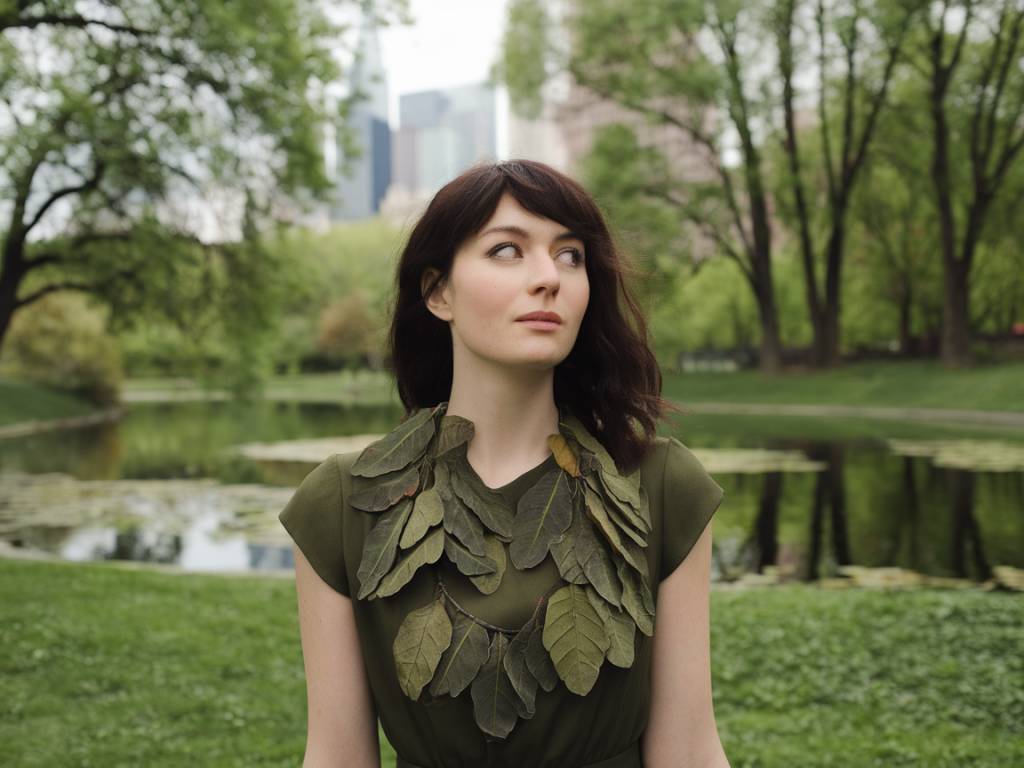
Salli Richardson
By Roy S. Johnson
Since a 1991 Wlm debut (“Up Against the Wall”), Richardson has appeared in numerous Wlms (including “Posse,” “A Low Down Dirty Shame,” “Anacondas: The Hunt for the Blood Orchid,” “The Antwone Fisher Story” and “Biker Boyz”). Her husband is actor Dondre WhitWeld, whose credits include “Ghost Whisperer,” “Girlfriends,” “Secret Agent Man.”
Despite her successes, Richardson, like almost every African-American trying to make it in Hollywood, is frustrated by the dearth of quality roles and opportunities for Blacks, particularly Black women. That’s why Richardson and her husband are leveraging their visibility and relationships in the industry to diversify their endeavors. Richardson is launching an acne treatment skin-care line this year designed for people of color. WhitWeld co-founded (along with baseball star Kenny Lofton and actor Brett Elde) a production and post-production company.
On the day we spoke, Richardson had just arrived in her Chicago hometown to celebrate Christmas with her family. She’s a former high-school tennis player and has fond memories of beginning her acting career at the Kuumba Workshop in the so-called Second City. Richardson and her three siblings—all brothers—are an ethnic menagerie. Her mother, Marcia Harris, is African American and Cherokee, while her father, Duel Richardson, is of Irish and Italian descent. Despite the mixture, Richardson says she was never confused about who she is. “To me,” she says. “I was a Black woman and that was how I felt comfortable.”
The list of your television and film projects is quite long. Honestly, I think that’s what I’m proudest of. A lot of people may do huge projects and then not work for a year. The [trick] of the game is just to keep building your resume and doing diVerent things. And I’m happy about being able to do that. At times, I do get frustrated about the lack of major, quality projects for Black actors but I do work.
Sometimes I feel like if my husband and I were white in this business, with some of the projects we’ve done, we would be huge. But African Americans only get two or three [of their number] that can get to the top. That’s frustrating. I’ve actually been lucky because a lot of the roles I get, especially the television projects, have been written for white women.
One multi-ethnic hit that has gained a lot of attention and accolades is “Grey’s Anatomy.” How does its success impact the prospects for actresses of color, if at all? It was created by a Black woman [Shonda Rhimes], which many people still don’t know. That’s the real change, the one that could be most vital and potentially the most impactful. When more of us are creating projects, then more prime roles will go to actors of color. Simple as that. Hopefully people in Hollywood will notice how well a show is doing and how well it is being perceived by viewers and others in the industry. That will allow more of us to write great things and not just minstrel shows.
How long have you been playing golf and how did you pick up the game? I’ve been playing for 10 years now. It all began when an organizer of a celebrity tournament in Jamaica asked me if I played golf. So I took a lesson that day and on the following day played nine holes. Amazingly, I won the women’s low-net competition. I had a lot of help from my caddie, an old Jamaican who worked with me while we were playing. It was like having a second lesson. I had just started dating Dondre at the time, who was already a big golfer and excited about me playing. Soon after that trip I got my Wrst set of clubs and it was on.
Golf will tell you what kind of person you are. I always record my real score, not a score after taking mulligans all over the course. I have to be honest. When I get an eight, I take an eight. When you cheat you’re only cheating yourself. I can’t play with people who cheat.
Has having a child helped you focus on some of your charitable efforts? Absolutely. It’s something I want to do more of, and it’ll likely be in the area of fighting sickle cell, one of the most widespread diseases among Blacks.
What’s next? I play it by ear and take it as it comes. I’ll do films I’m interested in; that’s the plan. I’d love the opportunity to do a Broadway play, especially in a role that allows me to shape it as an actress. In film, not a lot of it is in your control. I don’t care what others tell you; it ain’t your choice. You don’t get to pick and choose and say, “Hmm, I think I want to do this kind of movie this year.” Not happening. Not for us. Or at least not for all except a very, very few. And that’s a shame because there are too many great stories left to tell and many talented Black actors and actresses eager and able to tell them.
Related Articles
Defense is a tactic predicated on instinct and the knowledge of an opponent’s tendencies. If a momentary lapse in judgment favors one over the other, than a game of pure skill becomes one of mere chance. Waiting with his fingers crossed has never been in Dwyane Wade’s repertoire. For him, a second is a lifetime and a minute is an eternity—neither to be wasted.
Amerie knows what she wants. Not in that grandiose ‘I’m a diva’ fashion, but instead with a consciousness that comes after nearly a decade in the music industry. It’s evident the minute the songstress crosses the threshold to the intimate Brooklyn design studio. Her disheveled locks hide behind oversized Helena Rubinstein shades.
In a universe of mesmerizing polychromatic hues, Jeanne Moutoussamy-Ashe captures the world in two colors—black and white. Her photography is comprised of images textured by muted tones that summon the observer to see themselves within the piece. From a wedding day pictorial to the lowering of a casket, her work limns the spectrum of life. Moutoussamy-Ashe’s portfolio expands over four decades and continues to influence new generations of photographers.


Comments
Post new comment